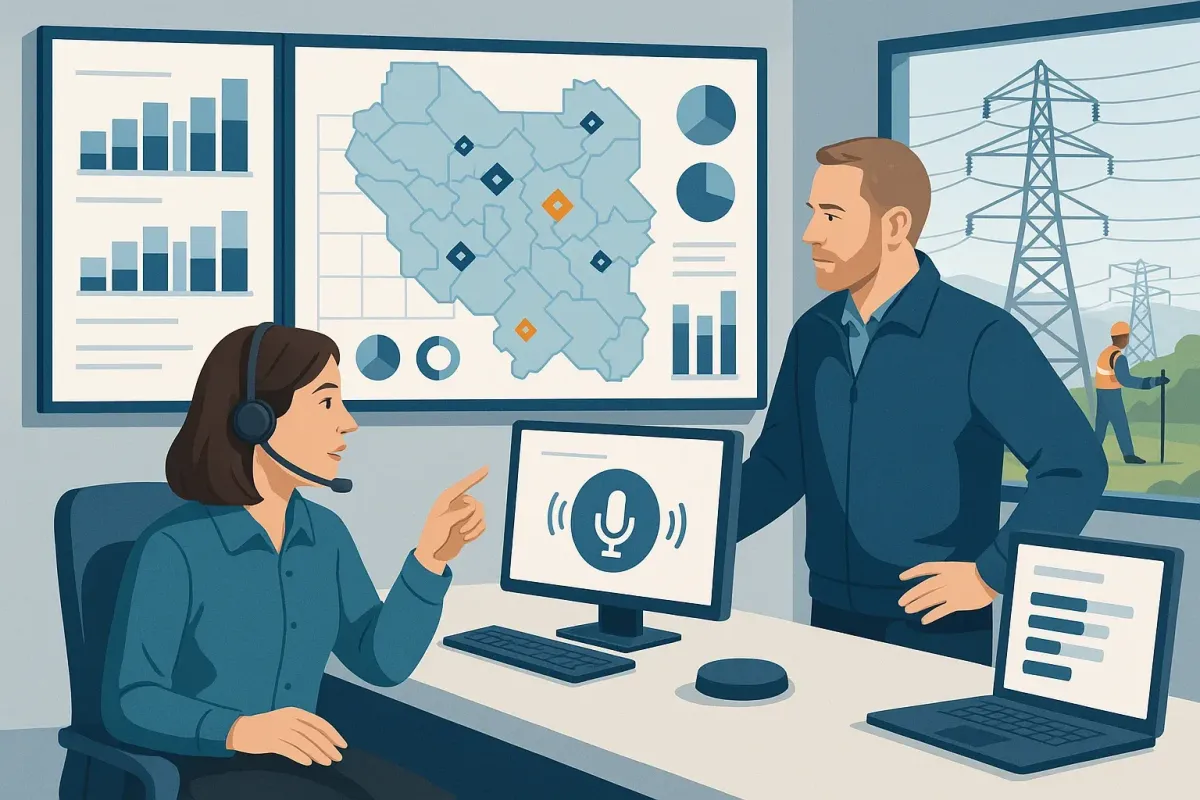
Rate‑Case and Regulatory‑Aligned Operating Model for Utilities Voice AI
A practical operating model for utilities to deploy high-volume Voice AI that respects rate-case parameters and regulatory boundaries while preserving safe outage communications, account-safe validation, and reliable integrations.
1. Why a rate-case and regulatory‑aligned Voice AI operating model matters
Voice AI can reduce handle time and improve throughput, but utilities must align automation to rate-case commitments, regulatory disclosure, and public-safety boundaries. This section clarifies the operating imperative and the constraints that should shape design and procurement.
Operational priorities tied to rate cases
Rate cases and regulatory agreements typically define allowable service levels, reporting obligations, and customer-notice requirements. Design Voice AI flows that map to those commitments: define which call types are eligible for automated handling, which require recorded notice, and which always require agent or field escalation. Treat rate-case commitments as binding operational parameters for routing rules, SLA timers, and event tagging.
- Map call categories (billing, outage, new service, safety report) to approved automation levels.
- Ensure SLAs (answer time, resolution time, callback windows) are configurable and auditable for reporting.
- Tag events for rate-case reporting (automated-handled, agent-handled, escalated-to-field).
Regulatory and safety boundaries
Voice AI must not be positioned to make infrastructure or life-safety decisions. Define explicit safety boundaries in the operating model: immediate transfer to emergency services, passthrough for suspected gas leaks or downed lines, and mandatory human oversight for any operational instruction that could affect service safety. Document these boundaries in both technical design and agent playbooks.
- Hard-stop intents that result in immediate human escalation (e.g., gas odor, exposed conductor).
- Pre-scripted disclaimers where regulation or rate-case terms require notice before automation handles account-level actions.
- Audit trails for any action that changes bills, service status, or field-service dispatch.
2. Architecture: the accountable call flow
A clear, auditable architecture reduces risk and operational friction. The canonical pattern is: Customer call → Voice AI → account or location validation → approved utility API or knowledge source → service request, status response, or human escalation.
Channel orchestration and high‑volume intake
Orchestrate channels so Voice AI is the default high-volume intake for eligible calls, with seamless transfer to agents where needed. Use IVR routing policies and predictive overflow: start with intent classification and pre-bake account-context retrieval for known callers to reduce back-and-forth. Ensure the system records intent confidence and decision path for later QA and regulatory review.
- Front-load lightweight authentication (CLI, verified callback number) to enable read-only account context.
- Classify intent with confidence scores and route low-confidence calls to agents.
- Log full intent, confidence, and timestamps for auditability.
Account‑safe validation pattern
Adopt an account-safe approach: default to read-only data retrieval and status responses; require multi-factor or policy-approved verification before any write or billing action. Validation should be layered: phone number and device signals, knowledge-based checks where allowed, and agent verification for high-risk requests.
- Read-only responses for billing balances, outage status, and scheduled work without exposing sensitive details.
- Escalate to human agent or require explicit verified consent before changing payment method or scheduling service.
- Record validation steps and link to the resulting action for rate-case audits.
3. Governance, risk management, and cyber controls
Align Voice AI governance to recognized risk frameworks and sector guidance. This section describes required controls, maturity goals, and documentation practices to satisfy internal audit and regulators.
AI risk management alignment
Map Voice AI risks—incorrect responses, unauthorized actions, privacy lapses—to an AI risk-management profile. Use the NIST AI Risk Management Framework's Critical Infrastructure Profile to structure risk assessments, mitigation measures, and monitoring plans. Document decisions about acceptable automation boundaries and residual risk for each call type.
- Perform an AI risk assessment per call category and publish documented mitigation steps.
- Maintain a model- and prompt-change log tied to operational testing and deployment dates.
- Use confidence thresholds and mandatory human confirmation for high-impact intents.
Cyber performance and continuity
Apply cross-sector cybersecurity performance goals and energy-sector maturity practices to Voice AI deployments. Use layered access controls, least-privilege service accounts for adapters, and tested incident response plans that include Voice AI failure and integration loss scenarios.
- Implement role-based access and narrow service account privileges for every backend connector.
- Run tabletop exercises simulating API loss, elevated false positives/negatives, and surge-call volumes.
- Maintain an incident response runbook that includes customer-communication templates and fallbacks.
Data residency, retention, and access
Specify hosting region, backup region, subprocessors, retention policies, and recording consent up front. Distinguish between transient verification data, analytic event records, and retained voice recordings. For cross-border scenarios, identify transfer mechanisms and document any subprocessors with access to recordings or transcripts.
- Declare hosting and backup geographies in the SOW, and identify subprocessors that will handle voice data.
- Differentiate retention windows for recordings (short-term for QA) vs. event logs (longer for regulatory reporting).
- Define breach duties and notification timelines consistent with jurisdictional requirements.
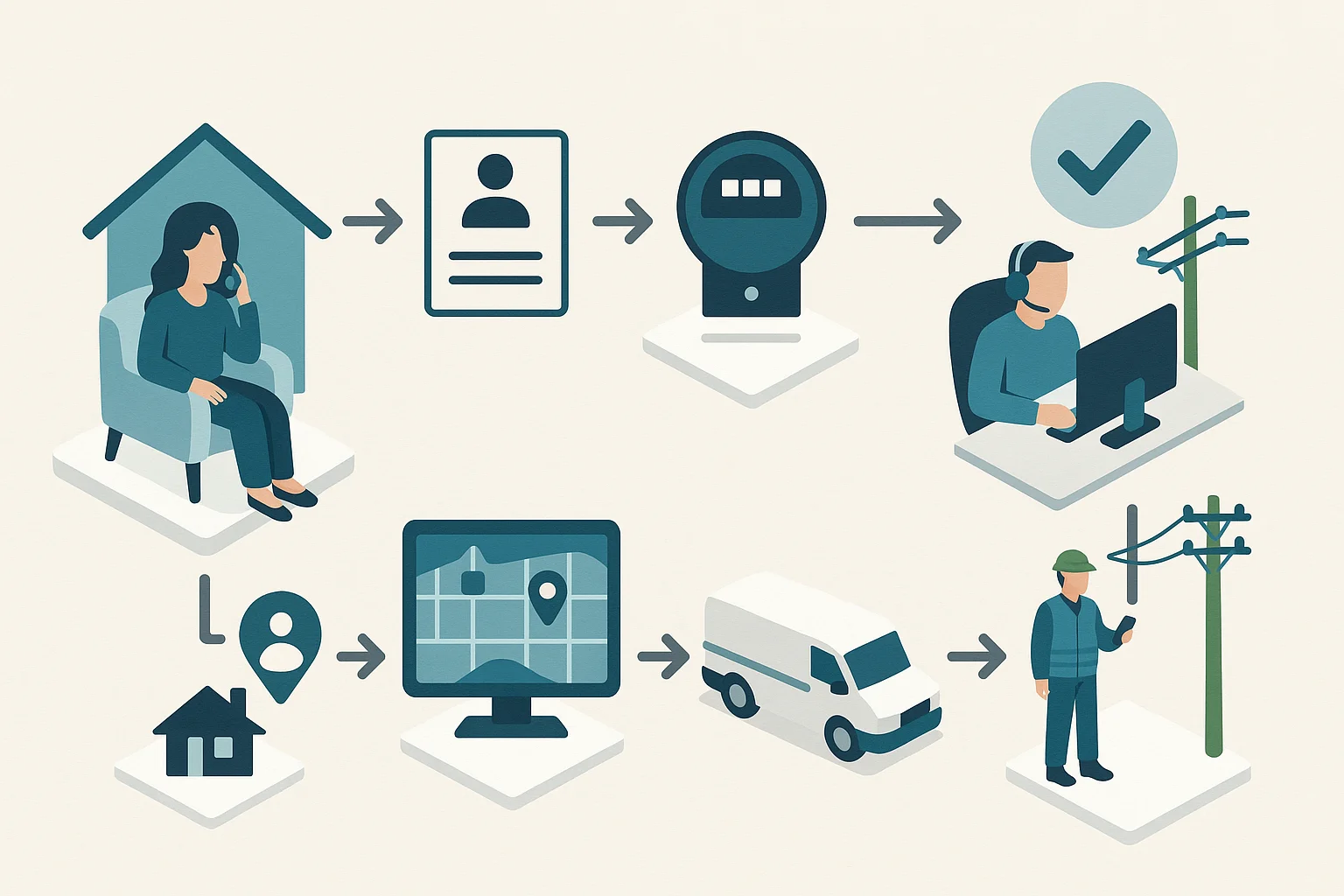
4. Integration, observability, and event analytics
Operational assurance depends on observability and a contract-driven event architecture. Instrumenting every step from call arrival to final disposition enables rate-case reporting and continuous improvement.
Data contracts and event architecture
Use explicit data contracts and event schemas between Voice AI, the orchestration layer, and backend systems. Event records must capture intent, confidence, validation steps, API calls, decision outcomes, and timestamps for rate-case reconciliation and audits.
- Define minimum event payloads for each call outcome (automated handled, queued, escalated, dispatched).
- Keep events immutable and exportable for auditors and regulators.
- Correlate events with backend state changes (work-order created, service-status updated).
OMS/CIS/CRM integration patterns
Adopt pattern libraries: read-only enrichment, action request (write mediated by orchestration), and notification-only (no backend change). Each pattern dictates validation, logging, and rollback behavior.
- Read-only enrichment: return customer and outage status without changing records.
- Action request: create a draft work-order in orchestration, require human approval or a validated signature before committing.
- Notification-only: leave backend unchanged but notify agents or field crews with contextual data.
Event‑level analytics for rate-case reporting
Build dashboards that report automated-handling rates, escalation triggers, validation failures, and field-dispatch conversions. Use event-level analytics to show regulators how automation maps to customer outcomes and where manual intervention occurs.
- Reportable metrics should include handled-by-voice, escalations, false‑negative/false‑positive intent rates, and time-to-dispatch.
- Keep raw event streams available for ad-hoc regulatory requests.
- Use analytics to refine intent models and validation logic, with a controlled change process.
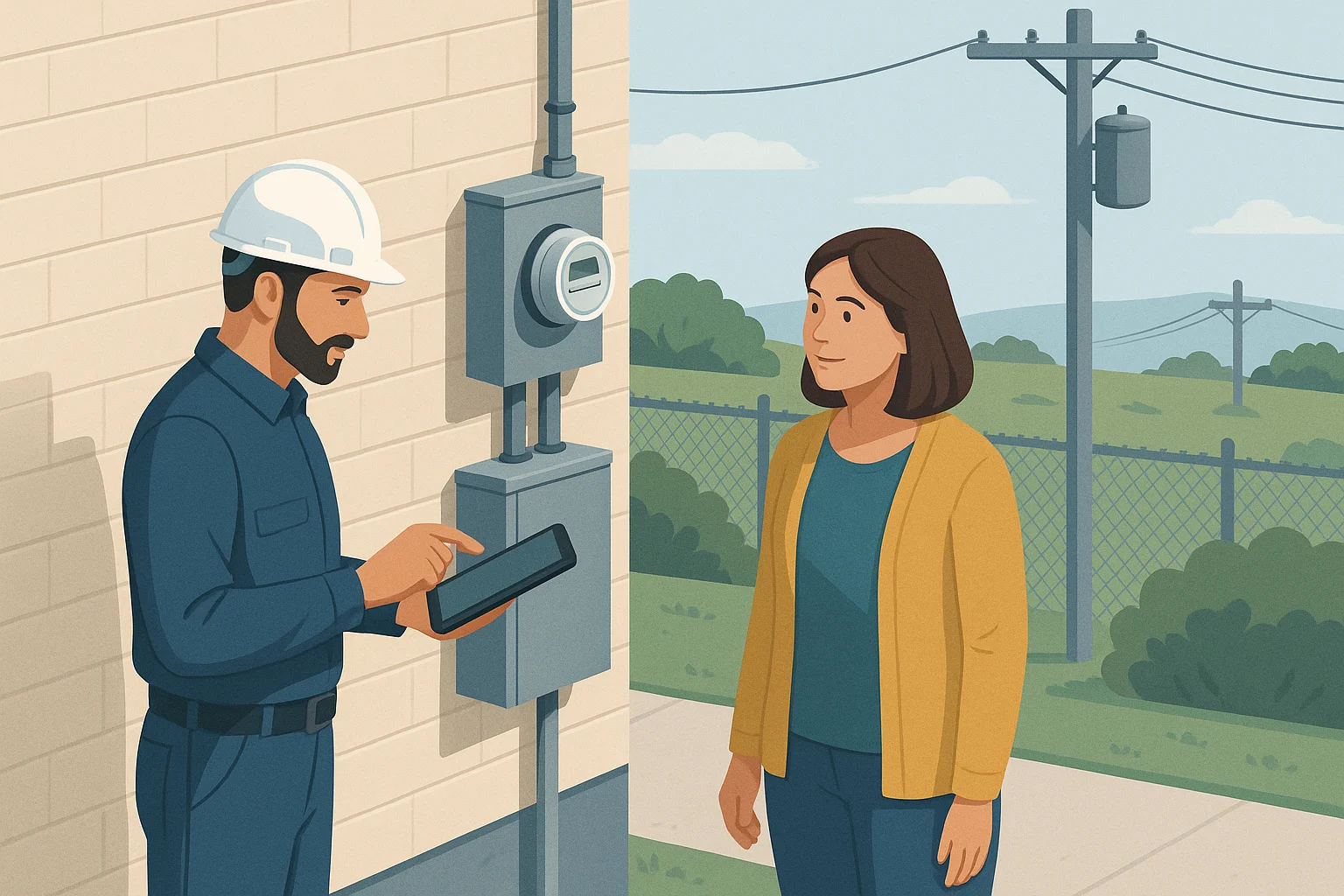
5. Operational workflows, failure modes, and human escalation
Prepare for realistic failure modes and define human-in-the-loop paths. Clear operational playbooks reduce regulatory risk and customer harm.
Outage communications and surge handling
For outage events, ensure Voice AI prioritizes safety messaging, status updates, and known-estimate windows while routing specific safety reports to agents. Design for surge—use overflow policies, prioritized callbacks, and acceptable fallback prompts when backend enrichment is delayed.
- Use predefined outage messages, avoid speculative ETA statements unless supported by field telemetry.
- Route any safety-related keywords to human agents immediately.
- Plan for queue overflow with callbacks and recorded-status-only messages to maintain service-level commitments.
Service‑request lifecycle and field routing
When Voice AI creates a service request, ensure the orchestration layer produces a complete work packet for field dispatch: location verification, risk notes, required permits, and photos where available. Use deterministic routing rules for crews, and prevent Voice AI from directly rescheduling crews without human confirmation in safety-sensitive cases.
- Validate premise location and access before creating or scheduling field work.
- Include recorded validation evidence (agent or customer consent) in the work packet.
- Lock scheduling changes behind supervisor approval for priority or safety-tagged jobs.
QA, escalation, and continuous improvement
Establish QA pipelines that sample recorded calls and transcripts, triage failure modes, and feed corrective actions to intent models and orchestration rules. Maintain a documented human‑escalation SLA and use analytics to manage vendor and internal performance against rate-case commitments.
- Define sampling rates and QA scoring criteria tied to regulatory priorities.
- Capture root causes for escalations and update routing rules to reduce recurrence.
- Use vendor scorecards with explicit escalation and remedy clauses in SOWs.

6. Procurement, deployment choices, and measurable outcomes
Select suppliers and deployment approaches that map to operating outcomes, rate-case evidence, and failure boundaries. This section outlines procurement must-haves and phased rollout recommendations.
Vendor evaluation and SOW evidence
Procure vendors with documented experience in high-volume utility Voice AI and require SOW clauses that govern surge capacity, observability, subprocessors, and data geography. Require evidence: runbooks, audit logs, API contracts, and test-results for simulated outage surges.
- Include measurable acceptance criteria: transaction logging, event exports, and QA pass rates.
- Demand a subprocessors list, hosting geographies, and retention policy in the contract.
- Use staged acceptance tests (functional, security, surge) with defined rollback points.
Deployment patterns and rollout
Deploy in phases: a constrained pilot for non‑safety calls, broader pilot including outage status responses, and full production with monitored agent fallback. Run each phase with pre-agreed success criteria and rollback triggers tied to customer-impact metrics and rate-case thresholds.
- Phase 1: low-risk inquiries with read-only responses and full agent handoff capability.
- Phase 2: service requests with orchestration mediation and supervisor approval gates.
- Phase 3: expanded automation with continuous monitoring and periodic regulatory reporting.
KPIs and governance for measurable outcomes
Define KPIs that regulators can understand: automated‑handling percentage by call type, escalations per 1,000 calls, validation failure rate, and time-to-dispatch for voice-originated work orders. Tie governance cadence to rate-case reporting cycles and internal audit schedules.
- Operational KPIs: average handle time, first-contact resolution, escalations, and queue times.
- Compliance KPIs: audit log completeness, data-retention compliance, and subprocessors disclosures.
- Review cadence: weekly ops dashboards, monthly governance board, quarterly regulatory-ready reports.
Related Peak Demand resources
Industry and AI sources reviewed
- AI Risk Management Framework — Critical Infrastructure ProfileNational Institute of Standards and Technology (NIST)
- Cross-Sector Cybersecurity Performance GoalsCybersecurity and Infrastructure Security Agency (CISA)
- Cybersecurity Capability Maturity Model (C2M2)U.S. Department of Energy
Utility cybersecurity, critical-infrastructure, records, customer-protection, and emergency-communications obligations vary by jurisdiction and service type. This article is operational guidance, not legal advice; organizations should confirm applicable requirements with qualified professionals.
Frequently asked questions
Good starting points include billing and account questions, move-in or move-out intake, appointment scheduling, service-request capture, outage-status messaging from approved systems, payment-routing assistance, and structured escalation. Safety-critical and infrastructure-control decisions should remain with qualified utility teams.
Official reference: Cross-Sector Cybersecurity Performance Goals
Use the minimum approved identifiers needed for the workflow, validate them against the utility's system of record, limit data exposure, and provide a human-assisted path when verification fails. The Voice AI should not guess account, premise, or outage information.
Official reference: Cross-Sector Cybersecurity Performance Goals
Use controlled adapters, strict schemas, timeouts, retries, audit logs, safe failure states, and human escalation. The system should distinguish approved utility data from model-generated language and should never present stale or unverified operational information as fact.
Official reference: Cybersecurity Capability Maturity Model (C2M2)
Track containment by request type, successful validations, transfers, abandoned calls, integration errors, incorrect or stale responses, time to resolution, customer follow-up, and the percentage of cases completed safely without manual rework.
Official reference: Cybersecurity Capability Maturity Model (C2M2)
Build resilient utility customer-service automation
Peak Demand helps utilities connect Voice AI to approved customer-information, outage-communication, service-request, dispatch, escalation, and analytics workflows.
Schedule a discovery call


