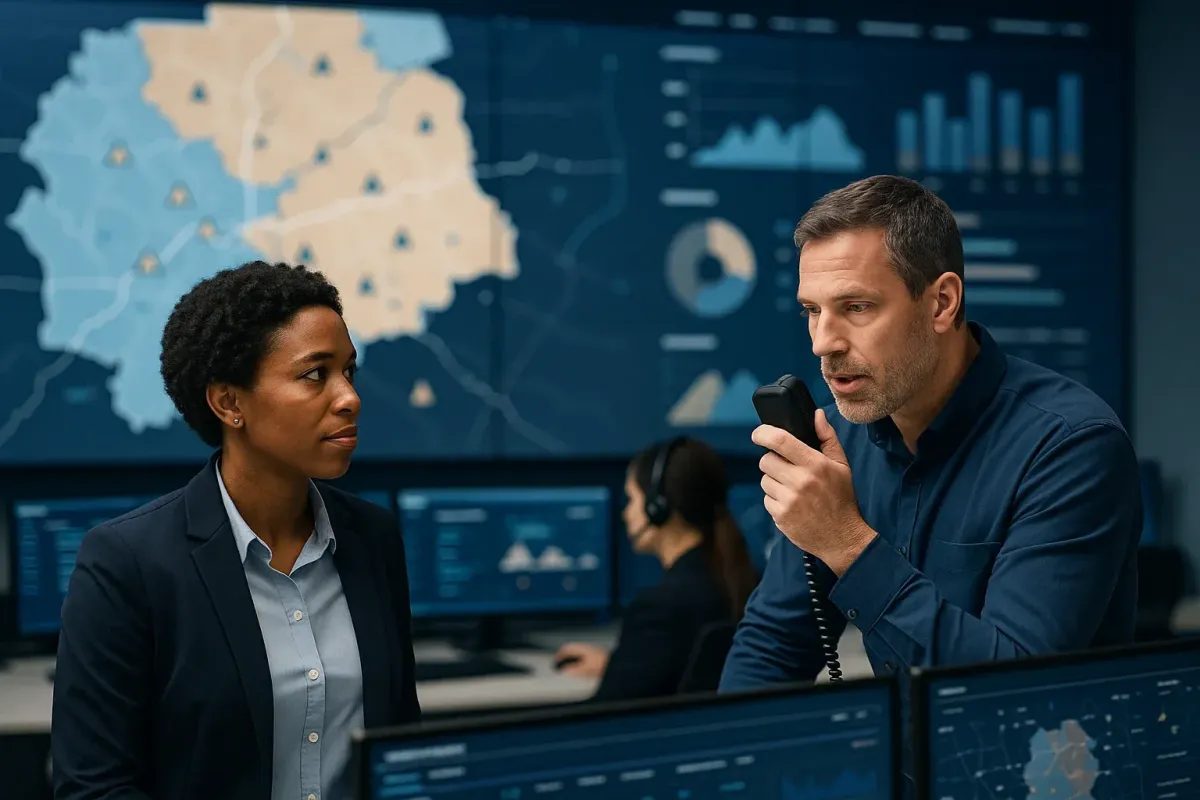
Data & Event Fabric for Utilities Voice AI: Bridging SCADA, AMI and Customer Channels
A practical operating framework for integrating Voice AI with SCADA, AMI, CIS/OMS and customer channels. Focus on reliable outage communications, account-safe validation, workflow routing, and operational safeguards.
Why a Data & Event Fabric is the operational foundation
Utilities operate multiple system domains—OT (SCADA), AMI, OMS, CIS/CRM, field service, and customer channels. Voice AI must not be an isolated interface: it requires a consistent event and data fabric that enforces contracts, preserves provenance, and enables deterministic routing across systems.
Operational gap the fabric solves
Voice interactions are transient; operational systems are stateful. An event fabric standardizes how calls, intents, confirmations, and system events are represented, persisted, and reconciled so downstream workflows (outage messaging, ticket creation, crew dispatch) run reliably.
- Decouples voice session semantics from system APIs through canonical events.
- Provides durable audit trails for regulatory and QA reviews.
- Enables replayable state for post-incident analysis and QA.
Design principles
Design the fabric for immutability, idempotence, and minimal trust. Event schemas must carry event origin, correlation identifiers, timestamps, validation state, and source authority. Use one-way event publication to systems where possible and controlled orchestration when two-way transactions are required.
- Immutability: events are append-only records; corrections create compensating events.
- Idempotence: retries must not duplicate actions in OMS/CIS.
- Authority: events include source trust level (voice AI confidence, system-authenticated data).
Core architecture: connecting Voice AI, SCADA, AMI and customer channels
Translate the familiar operational flow into architecture: Customer call → Voice AI → account or location validation → approved utility API or knowledge source → service request, status response, or human escalation. Below are concrete components and choices.
Event model and adapters
Implement a canonical event contract: session.start, session.intent, validation.result, service.request.created, outage.notification.sent, escalation.requested. Adapters map those contracts to utility systems using controlled connectors rather than direct writes when possible—e.g., a write adapter to OMS or a query adapter to CIS/AMI.
- Canonical events reduce translation errors between vendor systems.
- Adapters should encapsulate rate limits, authentication, and retry semantics.
- Prefer read-only queries for situational checks (AMI status) and brokered requests for state changes (create a ticket) with explicit approval steps.
Identity, validation and account-safe handling
Before exposing account data or initiating service actions, confirm caller identity via approved APIs and multi-factor validation flows appropriate to the operation. Use risk-based thresholds: for basic outage status, a premise-level validation (meter ID + service address) may suffice; for billing or access changes, require stronger authentication and human confirmation.
- Store only non-sensitive validation tokens in the event fabric; avoid full PII replication.
- Log validation decisions and confidence scores for auditability.
- Implement session-level flags to prevent escalation of a session after failed validations.
Peak Demand differentiation: high-volume routing and accountable escalation
Peak Demand’s operating model separates high-volume voice automation from escalation and field workflows by enforcing event-level accountability. Voice AI handles bulk intents and status checks; the fabric issues verified service requests and intelligent routing events to field systems with explicit handoff points and SLA-backed escalations.
- Dedicated orchestration that marks events for human review based on confidence thresholds.
- Event-level analytics for triage and workload balancing.
- Account-safe workflows that gate sensitive actions behind human approval or stronger API-based authorization.
Operational workflows: outage communications, service requests and field routing
Translate events into operational steps that are auditable and repeatable. Below are three common utility workflows and the operational controls required.
Outage reporting and customer notifications
When a caller reports an outage, the fabric should: normalize the report into a structured outage.event, attempt AMI/SCADA verification via read-only APIs, mark event confidence, and—if confirmed—publish an outage.notification linked to the OMS incident ID. If verification is inconclusive, escalate to a human agent for investigation before broadcasting.
- Use correlation IDs between customer reports and OMS incidents.
- Limit automated public notifications to verified or high-confidence events.
- Record call transcripts and event linkage for regulatory review.
Service-request intake and routing to field service
For requests such as meter tampering, leak reports, or service connections, create a service.request event containing validated location, priority, and required permit checks. The fabric then triggers field dispatch adapters that evaluate crew availability, safety constraints (e.g., gas leaks), and regulatory permits before converting the event into a dispatch instruction.
- Incorporate permit and safety-check status into routing decisions.
- Enforce human review for requests that alter physical infrastructure.
- Attach a digital ‘hand-off’ event when voice sessions transition to dispatch teams.
Status inquiries, ETA and follow-ups
Voice AI can handle high-volume status requests when the fabric attaches a recent authoritative snapshot (last known OMS/crew location, estimated restoration time). For planned outages or crew ETA changes, publish event updates and allow customers to subscribe to event-level notifications across channels.
- Snapshots should be time-stamped and include source system metadata.
- Provide subscription tokens managed by the fabric rather than raw account credentials.
- Throttle repeated queries with cached snapshots and a clear freshness policy.

Controls, governance and cybersecurity safeguards
Operational reliability depends on governance: clear policies for data flows, role-based access, observability, and incident response. Align practical controls with cross-sector cybersecurity expectations and critical-infrastructure AI risk management.
Practical governance and human oversight
Define a governance charter covering allowable Voice AI actions, escalation thresholds, and audit responsibilities. Maintain a catalogue of event schemas, approved adapters, and human-in-the-loop checkpoints. Regularly review false positives/negatives and adjust confidence thresholds.
- Document who can authorize automated actions versus those that must escalate.
- Retain event-level logs for operational QA and compliance reviews.
- Schedule periodic incident and tabletop exercises for voice-mediated scenarios.
Cybersecurity and operational resilience
Segregate the fabric from direct OT control planes. Apply network segmentation, least privilege, and multi-factor authentication for adapter credentials. Design the fabric to fail safe: if a verification API is unavailable, default to escalation rather than performing risky automated actions.
- Use dedicated service accounts with narrow scopes for each adapter.
- Log and alert on integration errors and anomalous event patterns.
- Maintain documented backup and restore procedures for event stores and metadata.

Implementation choices, procurement and vendor evaluation
Decisions—build vs. buy, managed service vs. in-house operation, connector ownership—have lasting operational and procurement consequences. Specify measurable contractual requirements and observable controls.
Vendor evaluation checklist
Require vendors to demonstrate adapter behavior under load, observable retry/backoff logic, and API contract tests. Insist on runbooks for failover, documented subprocessors, data residency options, and an agreed incident response playbook.
- Test vendor adapters with realistic event replay and error injection.
- Require SLAs for event delivery, adapter availability, and mean time to human escalation.
- Validate that vendors provide audit logs and access to event telemetry for your security team.
Managed service vs. in-house
Managed services accelerate deployment and bring operational experience, but your procurement should bind them to transparent telemetry, integration ownership boundaries, and a clear handover plan. For in-house builds, budget for event-store durability, connector maintenance, QA staffing, and long-term observability.
- Define clear ownership of adapters and who can change event contracts.
- Ensure migration paths and exportable telemetry if switching vendors.
- Include periodic independent audits or joint QA exercises.
Data residency, transfers and subprocessors
Document hosting regions, backup geography, remote support access, and any subprocessors. Identify retention windows and recording consent policies for audio and transcripts. Confirm obligations with legal and security teams for cross-border transfer or localization requirements.
- Prefer contractual clarity over vendor claims—document all subprocessors.
- Specify encryption at rest and in transit, and key-management responsibilities.
- Plan for data export and secure deletion per retention policy.
Failure modes, surge handling and incident response
Prepare for technology, integration, and operational failure. Define deterministic fallbacks and measurable recovery objectives for the fabric and Voice AI.
Surge capacity and graceful degradation
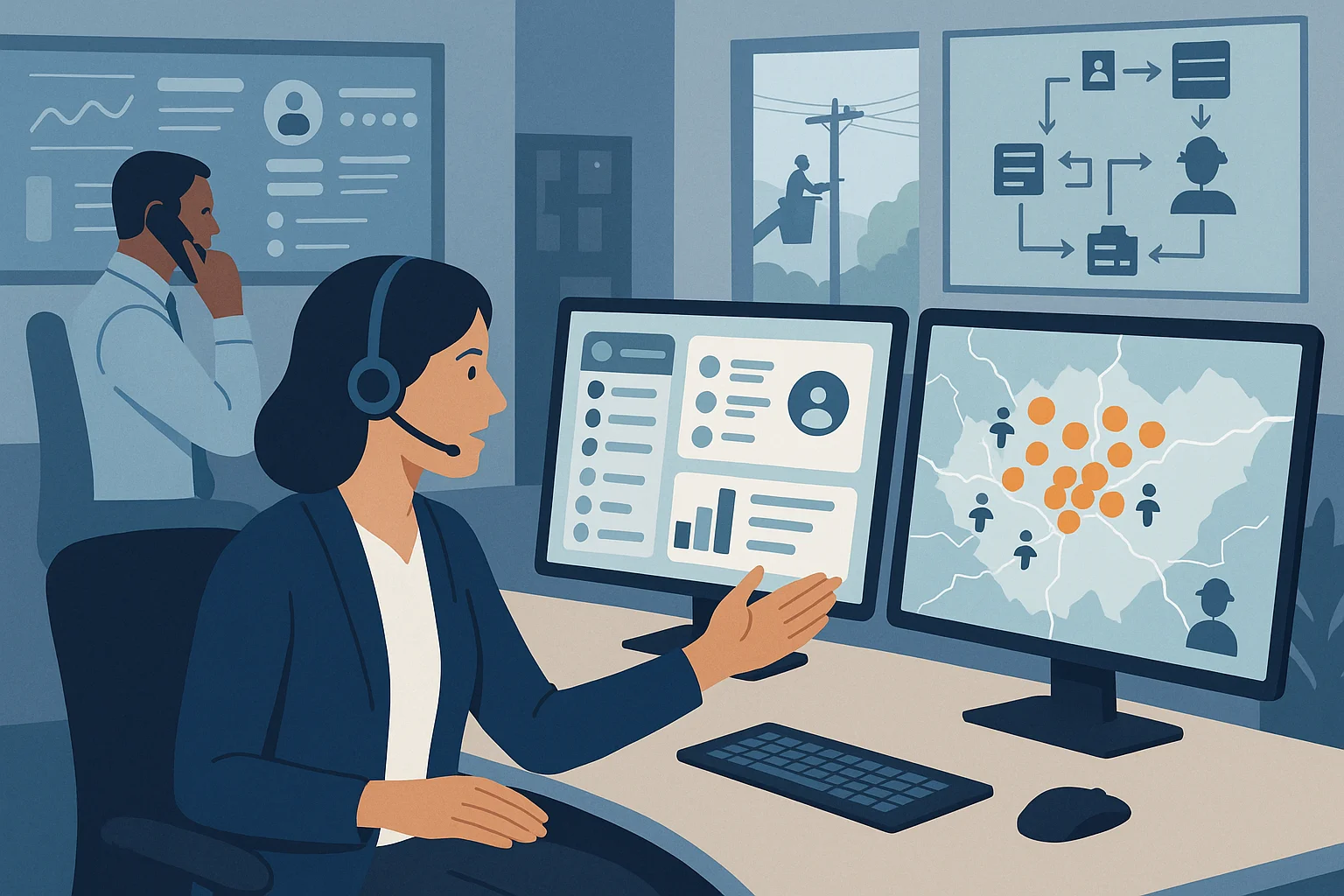
During storms or mass outages, design the fabric to prioritize verification and simple status queries while deferring low-value transactions. Use queueing, progressive backoff, and priority lanes for emergency-priority events. If adapters fail, route events to contact-center agents with context-rich handoffs.
- Predefine priority classes for outage reports vs. billing inquiries.
- Implement admission control to protect OMS from overload.
- Provide clear scripts and contextual information to agents when escalation occurs.
Incident response and post-incident analysis
Maintain a documented incident response playbook that includes event-store freezes, transcript preservation, and a communications plan. After incidents, replay events to identify false signals, measure decision latency, and adjust thresholds.
- Preserve immutable event snapshots for root-cause analysis.
- Measure time-to-human-escalation and decision accuracy post-incident.
- Update controls and training materials based on findings.
Measuring outcomes and phased rollout
A structured rollout with measurable KPIs keeps projects operationally accountable and reduces regulatory and customer risk.
Key operational metrics
Track validation success rate, automated-resolution rate, mean time to escalation, false outage-notification rate, integration error rate, and percentage of events requiring human correction. Use these metrics to gate broader automation.
- Set conservative thresholds in initial phases—e.g., require human approval for any action with medium confidence.
- Correlate Voice AI metrics with OMS/field outcomes (restoration accuracy, crew rework).
- Report metrics regularly to operational and regulatory stakeholders.
Phased deployment and QA
Begin with non-critical, high-volume intents (status checks, appointment scheduling) before moving to service requests that touch physical assets. Use a shadow mode to compare Voice AI decisions against human workflows, and conduct controlled A/B experiments.
- Start with limited geography and a single event class.
- Run parallel human verification and compare outcomes before toggling automation.
- Expand permissions as confidence and observability improve.
Related Peak Demand resources
Industry and AI sources reviewed
- AI Risk Management Framework — Critical Infrastructure ProfileNational Institute of Standards and Technology (NIST)
- Cross-Sector Cybersecurity Performance GoalsCybersecurity and Infrastructure Security Agency (CISA)
- Cybersecurity Capability Maturity Model (C2M2)U.S. Department of Energy
Utility cybersecurity, critical-infrastructure, records, customer-protection, and emergency-communications obligations vary by jurisdiction and service type. This article is operational guidance, not legal advice; organizations should confirm applicable requirements with qualified professionals.
Frequently asked questions
Good starting points include billing and account questions, move-in or move-out intake, appointment scheduling, service-request capture, outage-status messaging from approved systems, payment-routing assistance, and structured escalation. Safety-critical and infrastructure-control decisions should remain with qualified utility teams.
Official reference: Cross-Sector Cybersecurity Performance Goals
Use the minimum approved identifiers needed for the workflow, validate them against the utility's system of record, limit data exposure, and provide a human-assisted path when verification fails. The Voice AI should not guess account, premise, or outage information.
Official reference: Cross-Sector Cybersecurity Performance Goals
Use controlled adapters, strict schemas, timeouts, retries, audit logs, safe failure states, and human escalation. The system should distinguish approved utility data from model-generated language and should never present stale or unverified operational information as fact.
Official reference: Cybersecurity Capability Maturity Model (C2M2)
Track containment by request type, successful validations, transfers, abandoned calls, integration errors, incorrect or stale responses, time to resolution, customer follow-up, and the percentage of cases completed safely without manual rework.
Official reference: Cybersecurity Capability Maturity Model (C2M2)
Build resilient utility customer-service automation
Peak Demand helps utilities connect Voice AI to approved customer-information, outage-communication, service-request, dispatch, escalation, and analytics workflows.
Schedule a discovery call


