
Operational Metrics and Continuous Optimization for Multisite Manufacturing Voice AI
How multisite manufacturers and their dealer networks measure, govern, and continuously improve Voice AI for parts, warranty, and service intake—without overstepping technical or regulatory boundaries.
1. Why focused metrics matter for multisite manufacturing Voice AI
Voice AI can improve call availability and initial intake across manufacturing, dealer, and service networks — but operational value only appears when you measure the right outcomes. Avoid vanity metrics; design KPIs that connect to parts flow, warranty handling, and field-service dispatch.
From speed-to-answer to cost-to-serve
Manufacturing stakeholders care about reduced hold time and lower human hours per transaction, but those surface metrics must map to downstream impacts: reduced technician drive time, fewer incorrect parts shipped, fewer warranty cases reopened. Define cost-to-serve as a composite metric that includes agent minutes avoided, technician rework caused by bad intake, and parts return rates triggered by incorrect routing. Use per-call or per-case accounting rather than top-level averages so you can segment by product line, dealer, and site.
- Track minutes avoided (human talk time reclaimed) versus minutes added for escalations.
- Attribute technician rework and parts return rates to intake source (Voice AI vs human agent).
- Report cost-to-serve per SKU family and per dealer to reveal where Voice AI needs supplemental controls.
Containment quality vs escalation quality
Containment quality measures the percentage of interactions resolved by Voice AI without human touch. Escalation quality measures the correctness and efficiency of handoffs when Voice AI transfers to a human specialist. High containment with low escalation quality creates hidden costs; high escalation quality with low containment signals unrealized automation opportunities. Monitor both independently and design separate interventions.
- Containment Quality = resolved-by-AI interactions / total relevant interactions.
- Escalation Quality = percent of escalations routed to the correct team and closed within agreed SLA.
- Correlate containment with downstream rework and customer satisfaction to detect false positives (incorrect resolutions).
2. Operational architecture and controls
A deterministic architecture reduces failure modes and keeps warranty, parts, and safety decisions auditable. Use a simple orchestrated flow and require human checkpoints for regulated outcomes.
Canonical operating flow
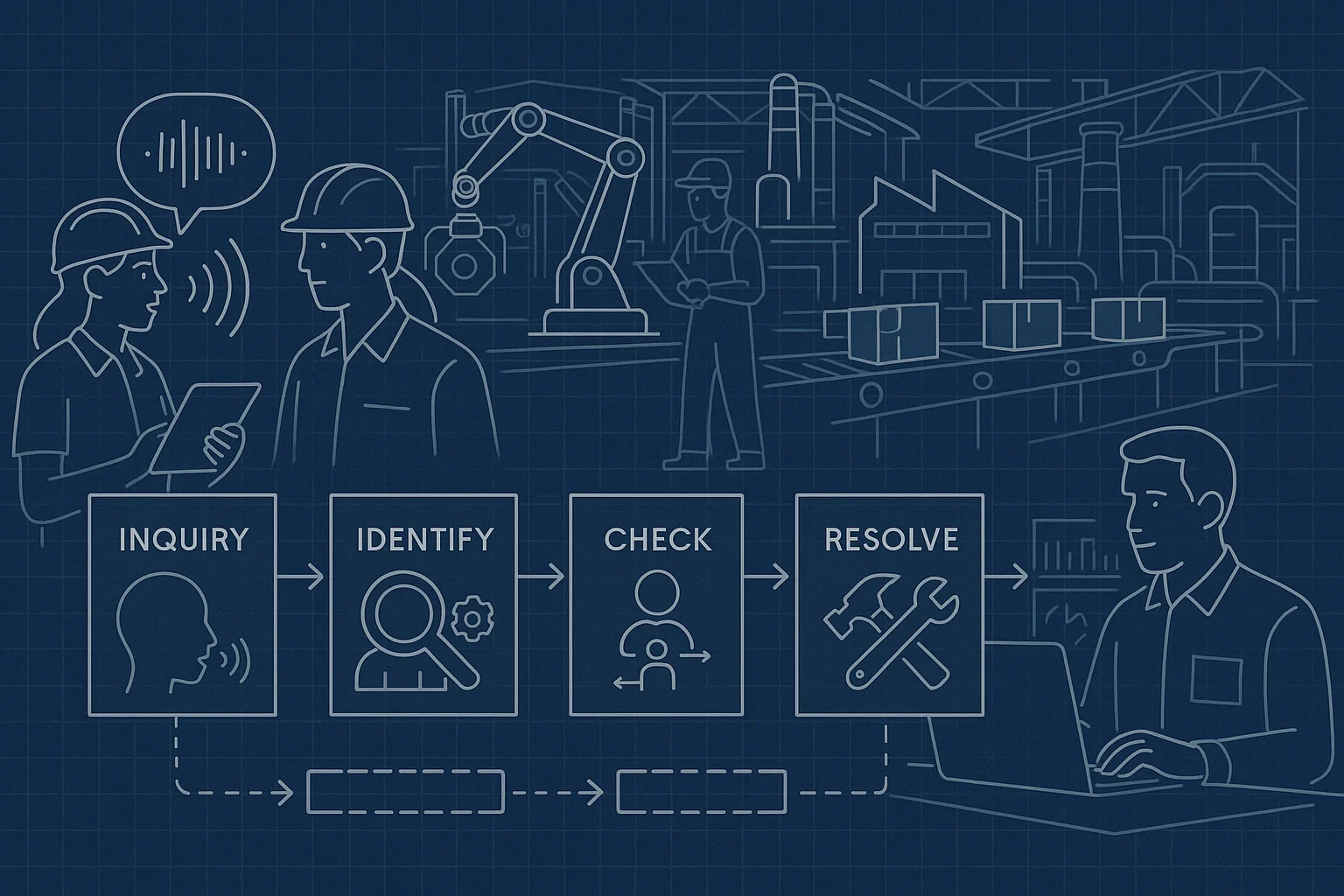
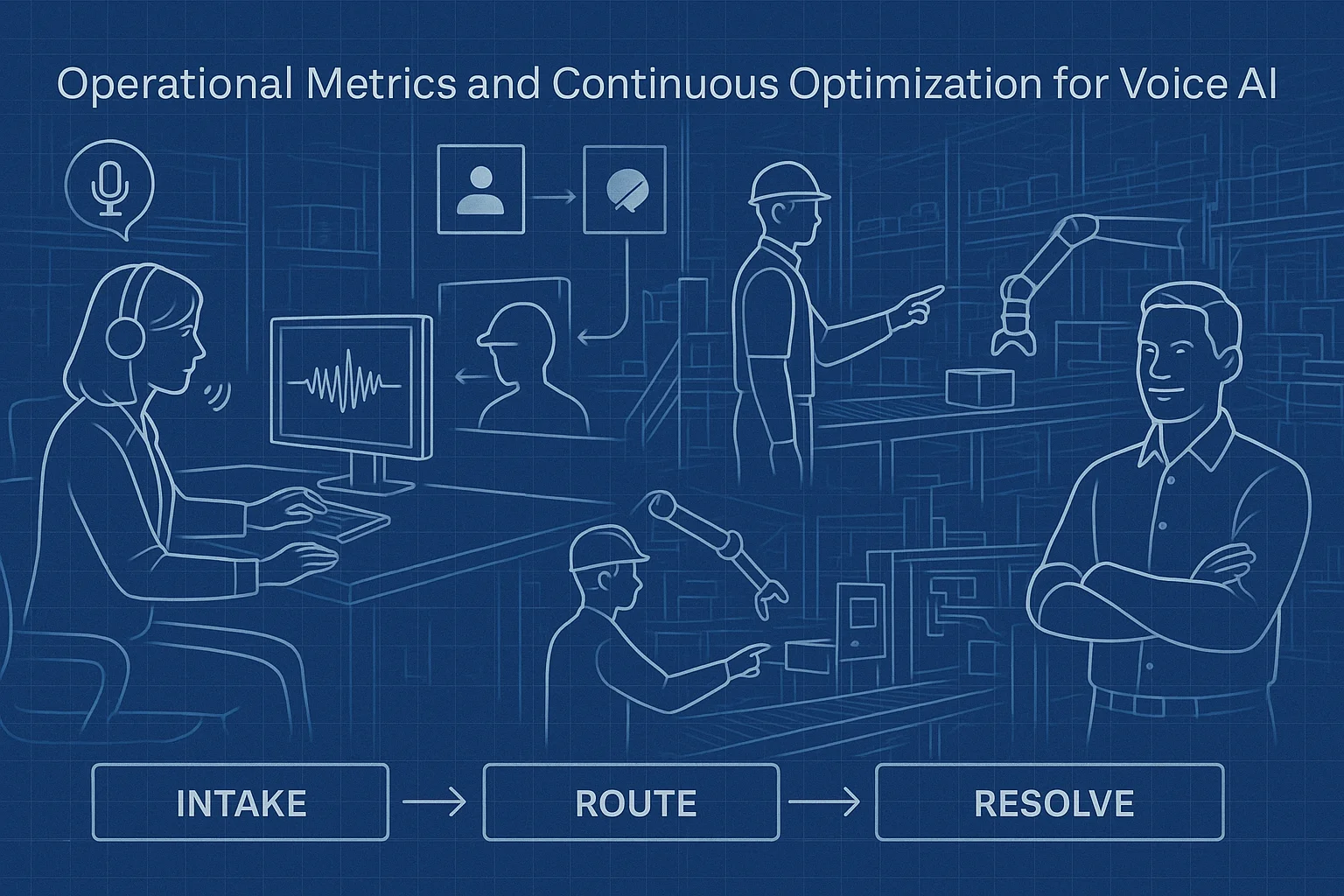
Standardize the caller journey as: Caller → Voice AI → intent and product validation → ERP/CRM/warranty/service API → create case/order inquiry or specialist handoff. Keep validation logic external to the conversational model: the Voice AI should collect structured identifiers (model number, serial, customer ID), then call business-system APIs to confirm warranty status, part numbers, and dealer assignment before creating transactions.
- Collect structured data points (SKU, serial, order number) rather than free-text problem descriptions where possible.
- Validate via API adapters against authoritative systems (ERP, CRM, warranty) before committing an order or promise.
- Log all validation attempts and outcomes in a tamper-evident audit trail for downstream QA and compliance.
Peak Demand differentiation: custom flows and integration ownership
Peak Demand configures custom call flows that inject product- and dealer-specific validation checks and parts routing rules. Our operational model separates conversational intent recognition from transactional validation, using controlled adapters to ERP/CRM/service systems so that business logic (warranty rules, pricing, parts substitutions) stays governed by enterprise systems. This preserves accountability, reduces model drift risk, and simplifies supplier or dealer onboarding.
- Custom call flows for parts lookup, warranty intake, and dealer routing reduce false resolutions.
- Controlled adapters (not direct model access to systems) allow central governance of who can create or approve orders.
- Human-in-the-loop checkpoints for warranty approvals or safety-related work orders ensure no automated unilateral approvals.
3. QA, sampling, and analytics you can operationalize
QA is not a one-time project. Treat QA as a continuous operational system: automated telemetry, structured human review, and prioritized remedial actions.
Design QA around error classes, not just call volume
Categorize failures into intent-misclassification, numeric-data-capture errors (serial, PO), validation-failures (ERP lookup returns no match), and routing failures. For each class, define sampling rules: e.g., all validation-failure calls may be sampled at 100% until the error rate drops below a threshold; intent errors can follow stratified random sampling by product line.
- Automate triage tags to mark calls with failed lookups, ambiguous intents, or repeated caller retries.
- Route high-priority failure classes into a daily human review queue for rapid remediation.
- Maintain a defect log with root cause, remediation action, and owner for continuous monitoring.
Analytics to close the loop
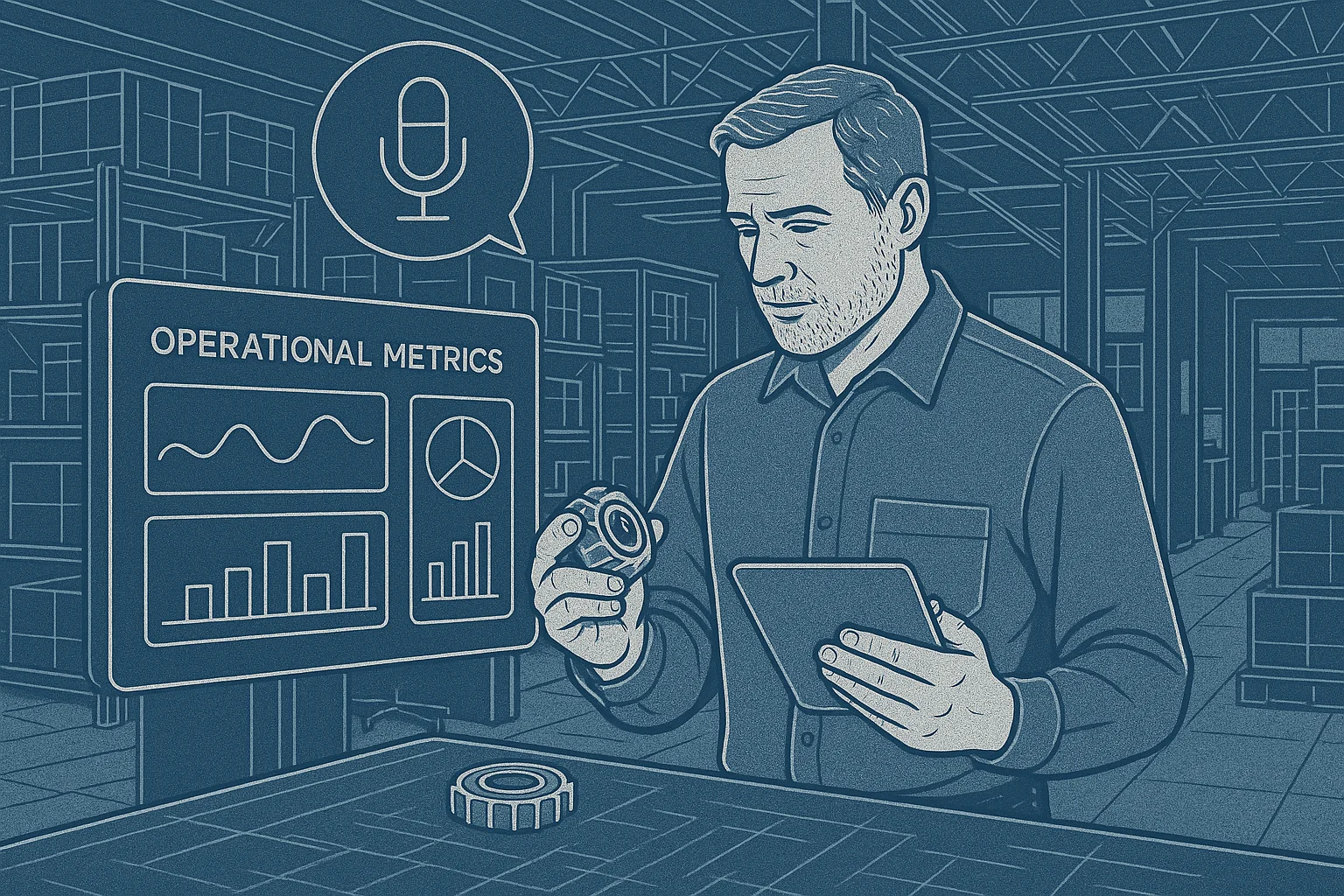
Instrument the Voice AI to emit structured events for every decision: data-capture, validation checks, API responses, containment outcomes, and escalation targets. Build dashboards that map these events to operational outcomes: technician revisits, parts returns, warranty reversals, and SLA attainment. Use these signals to prioritize script updates, NLU retraining, or business-rule modifications.
- Key dashboards: containment by product, escalation accuracy by dealer, validation-failures by site.
- Link Voice AI events to ERP/CRM case status so you can measure downstream outcomes.
- Use anomaly detection to surface sudden shifts (language model drift, API failures, or site-specific spikes).
4. Multisite scale, multilingual operations, and deployment controls
Scaling Voice AI across manufacturing sites and dealer networks requires both linguistic coverage and operational controls for data residency, regional routing, and system access.
Localized routing and language models
Build region-aware routing rules so calls from specific countries/regions route to localized models and dealer queues. Use separate NLU profiles for product lines that vary by market. For multilingual coverage, prefer deterministic prompts for data capture (numbers, model codes) and localized speech recognition models rather than a single global model—this reduces miscaptures and improves containment.
- Deploy language-specific ASR/NLU for high-volume languages; fall back to human handoff for low-volume languages.
- Localize prompts, error-handling, and validation copy to reflect dealer and warranty terms in the local language.
- Maintain language-performance KPIs and include them in the QA sampling plan.
Data residency, remote support, and OT boundaries
Document hosting region, backup region, subprocessors, and remote-support access as part of procurement. For manufacturing customers with OT environments, preserve an explicit boundary: Voice AI must not directly command OT devices. Use well-defined APIs and an orchestration layer for any action that could affect production or safety. Where local law or contractually required controls exist, confirm data residency and cross-border transfer rules with qualified legal counsel.
- Specify hosting and backup regions, subprocessors, and retention policies in contracts.
- Restrict Voice AI actions that could impact OT; require human authorization for any production or safety-related work orders.
- Plan for secure remote-support access with least-privilege and auditable session logs.
5. Continuous optimization: runbooks, change lanes, and retraining
Optimization is iterative and interdisciplinary. Combine operations, product, and engineering inputs into a cadence of runbook-driven changes.
Runbooks and controlled releases
Create runbooks that define accepted change types, rollback criteria, and validation steps. Typical changes include: dialog copy edits, NLU threshold adjustments, business-rule updates in adapters, and API schema changes. Each change should include test cases tied to the QA taxonomy and a canary rollout across a subset of sites or SKU families.
- Maintain separate staging and production adapters for ERP/CRM integrations.
- Use canary traffic to validate containment and escalation impact before full rollout.
- Define automatic rollback triggers (e.g., sudden rise in validation failures or escalation misroutes).
Model and business-rule retraining cadence
Schedule NLU retraining based on measured drift (intent accuracy drop, language drift) rather than calendar-only cadences. Prioritize retraining cohorts by product lines or dealer networks with high error rates. Keep business rules versioned and decoupled from conversational models so warranty or parts-policy updates do not require model retraining.
- Trigger retraining when intent confidence thresholds fall or when QA reveals systematic misclassification.
- Version business-rule adapters to allow fast rollback without model redeploys.
- Capture human-resolved escalations as labeled data for supervised improvements.
6. Procurement, failure boundaries, and operational SLAs
Procurement decisions should focus on accountability and observable outcomes, not marketing claims. Contracts must state who owns integrations, observability, and remediation.
What to buy and what to own
Specify in procurement who is responsible for API adapters, schema changes, and vendor-subprocessor lists. Peak Demand recommends vendor ownership of conversational infrastructure and secure adapters, with customer ownership of authoritative business logic (warranty rules, parts configuration) whenever possible. That split keeps transactional truths in enterprise systems while allowing the vendor to operate and maintain conversational capabilities.
- Contractually require access to structured logs and event streams for QA and audit.
- Define clear RACI for adapter maintenance and API schema changes.
- Require disclosure of subprocessors, hosting, and backup regions as part of the agreement.
Failure boundaries and human oversight
Explicitly enumerate actions Voice AI is authorized to take (e.g., create a service case, book a standard appointment) and actions requiring human approval (e.g., warranty exception approvals, safety work orders, product recalls). Log every automated action and provide an easy human review path. This preserves safety and legal accountability.
- List allowed automated transactions and those that require escalation in contract annexes.
- Design a simple human-override workflow with fast-access context for the specialist.
- Regularly audit automated transactions for anomalous patterns.
Related Peak Demand resources
Industry and AI sources reviewed
- Cybersecurity Resources for ManufacturersNIST Manufacturing Extension Partnership
- Cross-Sector Cybersecurity Performance GoalsCybersecurity and Infrastructure Security Agency (CISA)
- Guide to Operational Technology SecurityNational Institute of Standards and Technology (NIST)
Manufacturing cybersecurity, operational-technology, product, warranty, records, and workplace obligations vary by jurisdiction and operating environment. This article is operational guidance, not legal advice; organizations should confirm applicable requirements with qualified professionals.
Frequently asked questions
Strong starting points include parts and order-status requests, distributor or dealer support, warranty and service intake, appointment scheduling, case creation, basic product information, and routing to technical specialists. Keep engineering judgment, safety decisions, and operational-technology control outside the conversational layer.
Official reference: Cybersecurity Resources for Manufacturers
The workflow should collect structured identifiers such as model, serial number, part number, customer account, asset location, and symptoms, then validate them against ERP, CRM, catalogue, warranty, or service systems. The agent should escalate rather than invent a match when confidence is low.
Official reference: Cybersecurity Resources for Manufacturers
Not by default. Customer-service automation should normally use controlled business-system integrations and tightly governed adapters. Any connection near operational technology requires explicit security architecture, least privilege, monitoring, and separation from safety-critical control functions.
Official reference: Guide to Operational Technology Security
Require workflow mapping, integration ownership, test evidence, fallback behavior, auditability, security boundaries, change control, monitoring, human escalation, and a plan for maintaining product, parts, warranty, and service knowledge after launch.
Official reference: Cybersecurity Resources for Manufacturers
Connect Voice AI to real manufacturing service operations
Peak Demand helps manufacturers automate parts, order, warranty, dealer, distributor, and service requests through controlled integrations, validation, escalation, and reporting.
Schedule a discovery call


