
Infinitus is an AI-first healthcare platform that builds and orchestrates no-code voice agents, integrates clinical and payor systems, enforces safety guardrails and runs large-scale simulated testing before live use.
What does Infinitus do?
Infinitus is intended to sit alongside electronic health records, CRM and payor systems rather than replace them. Studio’s Agent Connectors are documented as the mechanism for pulling eligibility, case records, formulary data and for invoking external APIs from those systems, and product copy mentions Salesforce and Veeva integrations. For teams with an EHR or CRM, Infinitus can supply agent orchestration and data enrichment while leaving core records in existing software.
How could Infinitus handle a real caller request?
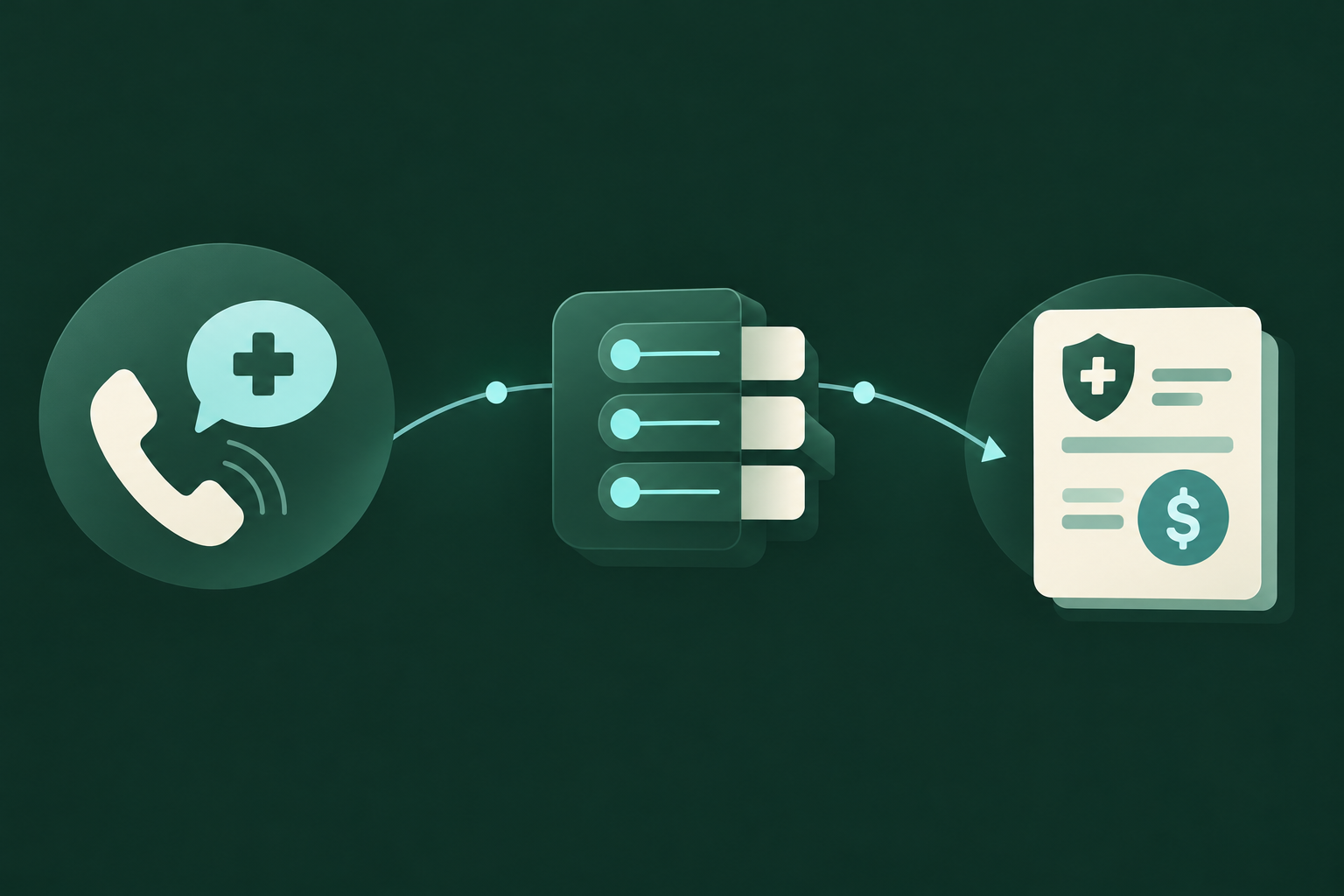
Studio is described as an orchestrator for end‑to‑end patient/member journeys — AI agents can authenticate callers, access case or eligibility records, respond with scripted or OpenAPI-driven content, place a caller on hold and transfer to a specialist. Visibility features and analytics are highlighted so teams can inspect simulated and live agent interactions. The product pages show recorded inbound call transcripts and handoffs to human specialists as part of a program flow.
Eligibility and copay clarification
Caller request: a member calls to confirm insurance eligibility and expected copay for an upcoming lab test. Documented platform action: Studio’s documented Agent Connectors pull eligibility details and the agent authenticates the caller, explains benefits and copay expectations, and offers a transfer to a specialist. Caller confirmation: the agent restates eligibility and copay, asks the caller to confirm that the summary matches their understanding and offers a transfer option.
Staff review required: operations should verify the eligibility record used by the agent against the payer system when records differ, confirm the copay calculation methodology matches billing rules, and handle edge cases or complex benefits. This workflow reflects actions shown in public transcripts; connector behaviour and exact fields pulled should be validated with the vendor and tested in simulation before production. Source: https://www.infinitus.ai/product/studio/
Formulary coverage question for a medication
Caller request: a patient asks whether a prescribed medication is covered by their plan and whether a generic alternative is preferred. Documented platform action: product material documents Agent Connectors pulling formulary details so an agent can report coverage status and formulary tier, then offer to transfer the caller to a pharmacy benefits specialist. Caller confirmation: the agent reads the formulary information and asks the caller to confirm they understand the coverage status and whether they want a transfer to a specialist.
Staff review required: pharmacy staff must validate formulary lookups and handle appeals or prior‑authorization needs if the agent returns non‑standard results. The platform pages show that formulary data is accessible via connectors, but integrators should map exact formulary fields and test for timely updates. If you require on‑platform prescription changes or appointments, treat that as a proposed workflow to validate with Infinitus and downstream systems. Source: https://www.infinitus.ai/
Escalation to clinician or specialist
Caller request: a caller requests to speak to a clinician about a complex symptom or to escalate an unresolved case. Documented platform action: sample transcripts and product copy indicate agents can place callers on hold, record the line and transfer them to a specialist or human team with context preserved. Caller confirmation: the agent confirms the reason for escalation, notifies the caller that the call will be transferred and that the line is recorded, and asks for any final information to pass to the specialist.
Staff review required: clinical staff must confirm handoff completeness, review any captured context or notes, and handle cases needing appointment scheduling or immediate clinical triage. The reviewed pages show transfer and recorded line behaviour; if your program requires the agent to book appointments, create orders or perform realtime clinical interventions, treat those as proposed workflows to validate technically and clinically with Infinitus and your clinical governance teams. Source: https://www.infinitus.ai/product/studio/
Which Infinitus capabilities are documented?
- Inbound calling: Public product material includes sample inbound call transcripts where an Infinitus agent answers calls, authenticates the caller, explains benefits, and offers transfers; calls are described as on a recorded line.
- Telephony / phone routing: Example transcripts and product text show agents placing callers on hold and transferring them to specialists, indicating call routing/transfer behavior in live interactions.
- Public APIs: Studio references turning an OpenAPI spec into an agent and mentions 'API triggers' and connectors to external systems; explicit public API surface, endpoint docs or API reference were not included in the reviewed pages. This capability has conditions to confirm before deployment.
- Tool / function calls: Studio describes generating agents from OpenAPI specs and using Agent Connectors to pull data and trigger actions, indicating capability to call external APIs/tools via connectors; granular function-call primitives are not explicitly documented in the reviewed text. This capability has conditions to confirm before deployment.
- Transfers / forwarding / handoff: Sample transcripts show agents transferring a caller to a specialist and product copy describes coordinating handoffs between AI agents and human teams.
- Knowledge bases / retrieval: Studio's Agent Connectors explicitly pull SOP documents, CRM data, payor portals, and formulary details so agents have necessary context from external knowledge sources.
- Workflow automation: Studio is described as an orchestrator for end-to-end patient/member journeys, coordinating AI agents, human agents, notifications, API triggers, and external system updates in sequences.
- Integrations / connectors: Studio documents 'Agent Connectors' and names integrations across Salesforce, Veeva and other systems to bring data into agents and sync updates out after calls.
What needs to connect behind the call?
Plain English: Studio uses 'Agent Connectors' to read SOPs, CRM records and payor/formulary data and to sync updates back to external systems. The reviewed pages explicitly cite connectors and ability to turn an OpenAPI definition into agent triggers, and name Salesforce and Veeva as examples. Detailed connector configuration, public API reference or low‑level connector wiring were not present in the reviewed pages, so vendors and integrators should request connector docs during procurement.
Where could Infinitus be a good fit?
Strengths to evaluate
Infinitus’s standout capabilities in the reviewed materials are: a no‑code Studio for designing healthcare agents from SOPs or OpenAPI specs; Agent Connectors to surface eligibility, case records and formulary data into conversations; patent‑pending Agent Response Control (ARC) to enforce safety/compliance in real time; an Optimizer for thousands of simulated test conversations; and program‑level visibility into agent interactions and escalation patterns.
Choosing the right fit
Infinitus is best suited to payors, providers and life‑sciences programmes that need healthcare‑grade safety controls, orchestrated call flows with human handoffs, and an interface for non‑developers to design or iterate agents. If your goals are compliance‑sensitive outreach, eligibility or formulary inquiries and measured simulation prior to deployment, Infinitus aligns well with those priorities based on the reviewed content.
What should you confirm before choosing it?
Material limitations identified in the supplied pages include a lack of low‑level telephony and developer documentation in the reviewed corpus. SIP/trunking primitives, explicit webhooks or published SDKs and direct TTS/STT or realtime media API references were not present in the product pages examined. This is a documentation‑level observation from the supplied material and should prompt a technical follow‑up if you require these primitives.
Access, security and staff control
The vendor emphasises healthcare‑grade safety and describes a patent‑pending Agent Response Control (ARC) to enforce guardrails and verbatim required language during agent interactions. Sample call material also labels interactions as occurring on a 'recorded line', indicating recording is part of the experience. The reviewed pages do not include listed third‑party certifications or attestation documents, so request evidence of specific compliance standards if they are required for procurement.
Pricing and commercial terms
The reviewed official pages do not provide pricing, billing models or per‑minute/per‑agent cost details. If budget modelling or procurement evaluation is needed, ask the vendor for current pricing tiers, contract terms and any usage or integration‑related fees — the public product pages supplied do not contain this information.
How should the workflow be tested?
Studio’s Optimizer is described as a simulation engine that pressures agents across thousands of simulated conversations prior to deployment. For operational testing, run caller scenarios such as eligibility checks, formulary coverage questions and transfer/handoff flows through Optimizer; verify transcripts, ARC enforcement of required language, recorded line labeling and analytics on escalation rates to ensure the agent meets quality and safety criteria before pilot routing begins.
What would Peak Demand add?
Peak Demand’s proposed contribution is vendor validation and programme design support rather than a completed deployment. We would scope telephony integration requirements, define connector data mappings to EHR/CRM, design authentication and transfer sequences, run Optimizer simulation cycles and produce operational dashboards and SOPs for staff review and escalation — all to validate program readiness and identify gaps to discuss with Infinitus engineers.
Official sources reviewed
Research reviewed 2026-10-12. Product names and logos belong to their respective owners. Peak Demand is an independent implementation provider unless otherwise stated.
Frequently asked questions
Does Infinitus include telephony primitives like SIP trunking and webhooks in the reviewed docs?
The product pages reviewed do not include explicit SIP/trunking documentation or webhook details. That absence is a documentation finding from the supplied pages, not definitive proof of capability. If low‑level telephony control or webhooks are required, request the vendor’s technical and connectivity documentation before procurement.
How does Infinitus handle compliance and safety in conversations?
Infinitus describes a patent‑pending Agent Response Control (ARC) to enforce real‑time safety guardrails and verbatim language where needed. The platform also shows recorded lines in sample transcripts. For formal compliance requirements, request SOC/HIPAA attestation or other certifications from the vendor, as those were not listed on the reviewed pages.
Can Infinitus access EHR, CRM and formulary systems?
Yes — the reviewed material documents 'Agent Connectors' that pull SOPs, CRM records and payor/formulary data and mentions integrations with Salesforce and Veeva. Teams should confirm connector configurations, data mappings and update cadence with Infinitus during technical discovery to ensure records align with your systems.
Does the platform provide testing before going live?
Studio includes an Optimizer described as performing large‑scale simulated conversations to pressure and iterate agents prior to deployment. We recommend running representative caller scenarios (eligibility, formulary checks, escalation) through the Optimizer and reviewing transcripts, ARC enforcement logs and analytics before pilot routing begins.
Where can I find pricing and contract terms?
Pricing, billing models and contract details were not included in the supplied official pages. To get current pricing and contract terms, request a formal quote and contract schedule from the vendor; include expected call volume, connection types and any connector or integration work in scope so estimates reflect operational needs.
Design the workflow before you automate it
Start with the calls you want to handle, the business records involved and the actions your staff can approve. Peak Demand can help assess the platform and design the integration around those requirements.
Schedule a discovery call


