How to Build Safe Submission Workflows for AI Agents
A definitive architecture and operating pattern for enterprise AI agent submissions: validation, containment, escalation, QA, observability, cost-to-serve, and multi‑site scale.
1. Why safe submission workflows matter
AI agents increasingly participate in decision workflows that touch CRMs, billing systems, EHR-adjacent tools, and provisioning APIs. A safe submission workflow prevents inappropriate or malformed actions, limits blast radius, and creates measurable boundaries for escalation and human oversight.
Operational risk framing
In enterprise environments, the failure mode for an AI-generated submission is not just an incorrect response — it is an unintended system action, duplicate transaction, data leakage, or an untracked audit gap. Design teams must treat every agent submission as an untrusted transaction that requires validation, transformation, and controlled execution.
- Submissions may originate from multiple channels (chat, voice, API) and must be normalized before action.
- Unvalidated submissions can create duplicate orders, misrouted tickets, or unauthorized adjustments.
- Auditability and traceability are primary safety controls — record intent, translation, and final action.
Business outcomes to protect and measure
Define measurable outcomes early: containment quality (percent of risky submissions stopped or deferred), escalation quality (percent of escalations that required human intervention), mean time to human rescue, and cost-to-serve per transaction. These KPIs drive engineering priorities, procurement choices, and SLA negotiation with vendors.
- Containment quality = effective prevention of high‑impact actions without human signoff.
- Escalation quality = relevance and timeliness of routed cases to human operators.
- Cost-to-serve = total compute + integration + human review amortized per successful transaction.
2. Core architecture pattern
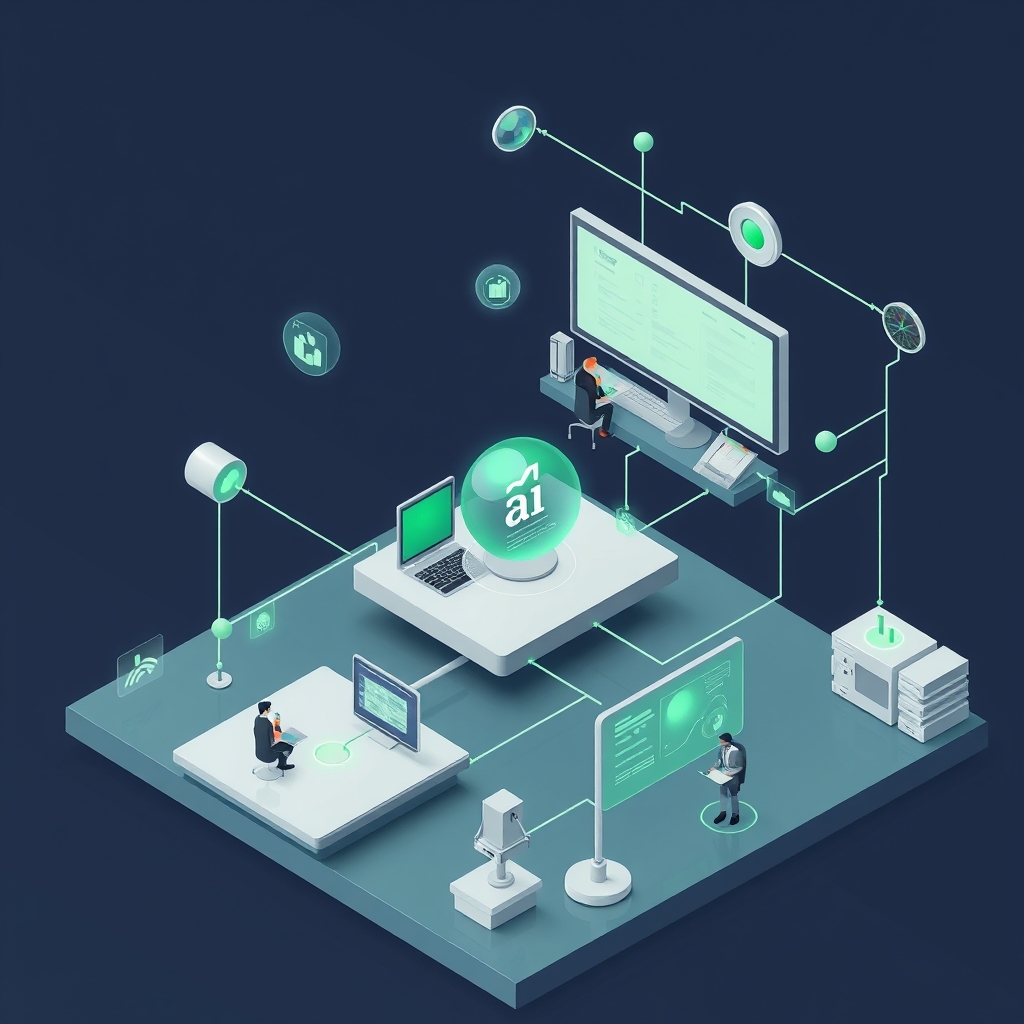
Adopt a guarded pipeline: User interaction → AI agent → policy & logic bridge → controlled adapters / APIs → validated system action → audit event + human fallback. The bridge centralizes safety mechanics so agents never talk directly to business systems.
The policy & logic bridge responsibilities
The logic bridge is the single control plane that receives proposed actions from agents and implements safety checks before any downstream effect. Responsibilities include input validation, schema normalization, idempotency keys, policy enforcement (authorization, operation whitelists), rate limiting, and controlled tool invocation.
- Normalize agent output into canonical request schemas that downstream APIs expect.
- Validate required fields, types, and semantic constraints (dates, currency, identifiers).
- Generate and check idempotency tokens to prevent duplicate operations across retries.
- Translate high‑level intents into parameterized, auditable API calls via adapters.
Adapters, orchestration, and failure boundaries
Adapters encapsulate each business system's quirks: API rate limits, field mappings, error semantics, and retry semantics. Orchestration layers apply circuit breakers, bulkheads per system or customer, and timeouts to keep failures contained to a bounded scope.
- Implement per‑system bulkheads (connection pools, concurrency limits) to avoid cascading failures.
- Use circuit breakers and exponential backoff on third‑party API errors, with graceful degradation modes.
- Keep retries idempotent and bounded; log retry attempts and last‑known status for operators.
Audit trail and human fallback
Every submission should produce an immutable audit record: agent intent, normalized request, policy decisions, adapter call and response, and operator actions (accept, modify, reject). Human fallback must be explicit: automated ‘prepare’ actions that require approval for high‑impact transactions.
- Store both the agent prompt/response pair and the translated API payload for later forensic review.
- Implement fast human-in-loop queues with contextual frames that include suggested fixes and test inputs.
- Record who approved or modified a submission and why; make this searchable for QA and compliance.
3. Quality Assurance and analytics
QA for submission workflows mixes automated tests, synthetic traffic, field monitoring, and human annotation. Instrumentation should tie model outputs to downstream outcomes so teams can quantify error types and continuous drift.
Test harness and synthetic workloads
Build a test harness that exercises the full pipeline: agent output variants, bad or malformed inputs, concurrency peaks, and downstream API failures. Synthetic workloads let you measure containment and escalation quality without exposing production systems.
- Create golden‑path test cases and adversarial examples that reflect real customer edge cases.
- Run nightly regression suites that include behavioral tests (e.g., no billing adjustments without approval).
- Use sandbox adapters that emulate production API error modes for safe resilience testing.
Observability and measurement
Collect metrics at each pipeline stage: validation pass rate, normalized schema error rate, idempotency conflicts, adapter latency, containment events, escalation counts, and per‑action cost. Instrument traces that link model response to final system action for root‑cause analysis.
- Define SLOs for validation latency and adapter success rate; alert on deviations.
- Measure containment quality (blocked submissions / risky submissions) and escalation quality (valid escalations / total escalations).
- Correlate model confidence signals with downstream failure types to refine thresholds.
Human annotation and feedback loops
Human QA is required to label ambiguous cases and to train and calibrate confidence thresholds. Capture corrections as structured feedback that flows back into models (where appropriate) and the logic bridge's rule set.
- Use sampled real traffic with redaction rules for human review panels.
- Convert common corrections into rule updates or schema validators in the bridge.
- Maintain a labeled dataset for continuous evaluation and A/B experiments.

4. Containment and escalation quality
Containment prevents high‑impact actions from running unchecked; escalation quality ensures humans see the right cases at the right time. Design these as separate, measurable subsystems.
Containment patterns
Use permissioned action sets and a risk classification tier for submissions. Low‑risk actions may be automated; medium and high‑risk actions require pre‑commit checks or human approval. Technical controls include capability tokens scoped per operation and runtime sandboxing for tool use.
- Risk tiering: map each operation to a risk category with explicit acceptance criteria.
- Scoped credentials and least‑privilege adapters for high‑risk domains (billing, PII, provisioning).
- Runtime sandboxing for experimental tool use; deny direct write access from experimental agents.
Escalation quality metrics
Measure escalation quality by relevance (percent of escalations that required human action), resolution time, and false escalation rate. These metrics should feed SLAs with managed vendors or internal teams.
- Track time to first human acknowledgement and mean time to resolution for escalations.
- Measure false escalation rates by sampling and human review to calibrate automation thresholds.
- Use routing logic to send escalations to the right team (region, language, skill) to minimize handoff cost.
Operator tooling and runbooks
Provide operators with contextual consoles that show the agent output, normalized payload, policy checks triggered, and recommended actions. Runbooks should be versioned, tested, and exercised under incident drills.
- Consoles must allow quick replays, rollbacks, and safe re‑submission after fixes.
- Runbooks must define escalation ladders and acceptable compensating transactions.
- Include audit exports and evidence bundles for post‑incident reviews.
5. Multi-site scale, multilingual operations & cost-to-serve
Scaling submission workflows across regions and languages requires isolation, routing, and cost controls. Design for per‑site observability and per‑language evaluation to avoid one-size-fits-all thresholds.
Regional isolation and data residency
Partition workloads by hosting region, backup geography, and processor location where business or policy requires. Explicitly document cross-border transfer mechanisms, subprocessors, retention, and access for remote support; validate obligations with qualified counsel.
- Use geo-aware routing to keep high-risk data within required regions; maintain separate backups and failovers.
- Document remote-support access and subprocessors in procurement materials and runbooks.
- Treat data residency and cross-border transfer as policy inputs to the logic bridge for routing and redaction decisions.
Multilingual QA and model routing
Segment language support by capability tiers. For critical languages or regions, maintain dedicated QA corpora and potentially separate model endpoints. Use language detection early in the pipeline to route to correct models and operator pools.
- Maintain per-language labeled data for QA and drift detection.
- Route to localized or specialist models when available; degrade gracefully to general models with additional containment.
- Measure containment/escalation KPIs per language and site to prioritize investments.
Cost-to-serve levers
Control cost with routing, caching, and fallback policies. Cache normalized read results, avoid unnecessary model calls for templated actions, and batch low‑risk operations. Tie cost metrics to SLOs and procurement decisions.
- Implement a request router that selects cheaper endpoints for low‑risk actions or uses cached data.
- Use model and adapter caching for repeated queries (e.g., customer profile lookups).
- Report per-transaction compute, integration, and human-review costs to tie optimizations to ROI.

6. Continuous optimization and procurement considerations
Operational safety is an ongoing program. Align procurement and vendor evaluation with the technical controls you expect: observable APIs, idempotency guarantees, schema versioning, and clear support for escalation workflows.
Vendor and procurement checklist
When evaluating vendors, require clear SLAs for observability (audit logs retained, traceability), support for idempotency keys, schema evolution practices, and documented security controls. Procurement should demand transparent subprocessors, data residency options, and mechanisms for incident evidence.
- Require APIs to support idempotency and clear failure semantics in their contracts.
- Ask for audit-log export formats and retention policies to integrate with your observability stack.
- Include remediation timeframes and support levels for escalation handling in SLAs.
Controlled rollout and A/B testing
Use phased rollouts with progressively relaxed containment: start with read-only suggestions, then pre-authorized operations, then fully automated low-risk actions. A/B test thresholds and human-in-loop policies; use experiment results to tune both model and bridge rules.
- Begin with shadow mode (no writes) and sample real traffic for evaluation.
- Progress to pre-commit approvals and small-percentage live traffic with clear rollback paths.
- Use feature flags tied to risk tiers and per-customer opt-ins for controlled expansion.
Schema governance and idempotency
Schema changes should be backward compatible; version schemas and validate at the bridge. Enforce idempotency on write operations and provide a reconciliation process for non-idempotent actions.
- Maintain a canonical schema registry and use contract tests for each adapter.
- Require idempotency tokens for any action that modifies state; reconcile token collisions explicitly.
- Log schema version with each audit entry to simplify root-cause investigations.
Related Peak Demand resources
Industry and AI sources reviewed
- Artificial Intelligence Risk Management Framework (AI RMF 1.0)National Institute of Standards and Technology (NIST)
- AI Risk Management Framework: Generative AI ProfileNational Institute of Standards and Technology (NIST)
- Secure by DesignCybersecurity and Infrastructure Security Agency (CISA)
Privacy, cybersecurity, contractual, records, and sector-specific obligations vary by jurisdiction and connected system. This article is operational guidance, not legal advice; organizations should confirm applicable requirements with qualified professionals.
Frequently asked questions
The integration layer should handle authentication, schemas, validation, timeouts, retries, permissions, duplicate prevention, audit logs, safe failure, and human escalation. It should expose only the tools and data required for the approved workflow.
Official reference: Secure by Design
Model Context Protocol can provide a standardized tool interface for approved data and actions, but it does not replace business logic, security controls, system-of-record validation, or performance engineering. Use it where it improves maintainability without adding unnecessary latency or complexity.
Official reference: Artificial Intelligence Risk Management Framework (AI RMF 1.0)
Use explicit timeouts, bounded retries, circuit breakers, clear caller messaging, queued follow-up where appropriate, and human escalation. The agent should never fabricate a successful lookup, booking, submission, or status update.
Official reference: Secure by Design
Ask for architecture diagrams, permission boundaries, schema validation, failure testing, observability, audit logs, credential management, deployment controls, rollback procedures, and evidence that every tool action is tied to an approved workflow.
Official reference: Secure by Design
Engineer the integration layer before scaling Voice AI
Peak Demand designs the APIs, logic bridges, validation, fallback, observability, and human-escalation infrastructure required for dependable Voice AI operations.
Schedule a discovery call


